Chapter 8 asked the “strong” Corinthians to lay down a right for the sake of a weaker brother; chapter 9 shows Paul doing exactly that with a right of his own, and on a much larger scale. As an apostle, he has every claim to be financially supported by the churches he serves — a claim he argues for at length, from Scripture, custom, and plain logic — and then declines to use, because giving the gospel away free matters more to him than being paid fairly for delivering it.
A study in 1 Corinthians 9 · Arthur Baldwin · StandUp4Jesus.Org · 16 min read
Have We Not Power To Eat And To Drink?
“Am I not an apostle? am I not free? have I not seen Jesus Christ our Lord? are not ye my work in the Lord? If I be not an apostle unto others, yet doubtless I am to you: for the seal of mine apostleship are ye in the Lord.”
1 Corinthians 9:1-2
Paul’s credentials as an apostle have apparently been questioned in Corinth, and his answer is refreshingly concrete: he has personally seen the risen Christ, and the Corinthian church itself, converted under his own ministry, is the living proof of his apostleship. No credential committee could offer stronger evidence than a transformed congregation.
“Have we not power to eat and to drink? Have we not power to lead about a sister, a wife, as well as other apostles, and as the brethren of the Lord, and Cephas? Or I only and Barnabas, have not we power to forbear working?”
1 Corinthians 9:4-6
Three concrete rights, stacked in a row: the right to material support, the right to travel with a believing spouse, and the right to stop secular labor entirely. Every other apostle Paul names, including Peter, exercises these rights without controversy. Paul is not describing a hypothetical privilege; he is naming the standard practice he alone, in Corinth, has chosen not to follow.
“Who goeth a warfare any time at his own charges? who planteth a vineyard, and eateth not of the fruit thereof? or who feedeth a flock, and eateth not of the milk of the flock?”
1 Corinthians 9:7
“Writing of his apostolic labors in their behalf, he inquired: ‘Who goeth a warfare any time at his own charges? who planteth a vineyard, and eateth not of the fruit thereof? or who feedeth a flock, and eateth not of the milk of the flock?’”
Ellen G. White · The Acts of the Apostles, p. 335
Three ordinary occupations — soldier, vinedresser, shepherd — each one naturally entitled to live from the very labor being performed. Paul’s logic is not a special appeal for ministers; it is the plainest common sense available, drawn from work every listener already understood.
“Say I these things as a man? or saith not the law the same also? For it is written in the law of Moses, Thou shalt not muzzle the mouth of the ox that treadeth out the corn. Doth God take care for oxen? Or saith he it altogether for our sakes?”
1 Corinthians 9:8-10
Paul reaches back to Deuteronomy’s law protecting a working ox’s right to eat from the very grain it threshes, and reads it as speaking, ultimately, about people rather than animals. The principle beneath the command — a worker should share in the fruit of the work — runs deeper than the specific case that first illustrated it.
“If we have sown unto you spiritual things, is it a great thing if we shall reap your carnal things? … Do ye not know that they which minister about holy things live of the things of the temple? and they which wait at the altar are partakers with the altar? Even so hath the Lord ordained that they which preach the gospel should live of the gospel.”
1 Corinthians 9:11-14
Paul closes the argument with the strongest authority available — not merely his own reasoning from nature and law, but a direct ordinance of the Lord Himself, on the same footing as the temple priests’ own right to eat from the offerings they served. By the end of verse 14, the case for financial support of gospel ministers is about as airtight as Scripture ever makes any single practical question.
That I Abuse Not My Power In The Gospel
“But I have used none of these things: neither have I written these things, that it should be so done unto me: for it were better for me to die, than that any man should make my glorying void.”
1 Corinthians 9:15
Having just built the most thorough case possible for his own right to support, Paul turns and refuses to claim it — and clarifies, almost urgently, that this whole argument was never a request. “Better for me to die” is startlingly strong language for what might otherwise sound like a minor point of personal preference.
“For though I preach the gospel, I have nothing to glory of: for necessity is laid upon me; yea, woe is unto me, if I preach not the gospel! For if I do this thing willingly, I have a reward: but if against my will, a dispensation of the gospel is committed unto me.”
1 Corinthians 9:16-17
Preaching itself, Paul insists, is not the thing he can take credit for — it is a compulsion laid on him from outside himself, not a personal achievement to glory in. What he can control, and what he does take deliberate ownership of, is the free manner in which he delivers a message he was never given the option to withhold.
“What is my reward then? Verily that, when I preach the gospel, I may make the gospel of Christ without charge, that I abuse not my power in the gospel.”
1 Corinthians 9:18
Paul finds his one genuine source of personal reward, oddly enough, in the very right he has just spent fourteen verses proving he holds and then refuses to exercise. Offering the gospel entirely free of charge is not a burden he tolerates; it is the specific accomplishment he chooses to take satisfaction in.
I Am Made All Things To All Men
“For though I be free from all men, yet have I made myself servant unto all, that I might gain the more.”
1 Corinthians 9:19
“Christ was establishing a kingdom on different principles. He called men, not to authority, but to service, the strong to bear the infirmities of the weak. … The words of Paul reveal the true dignity and honor of the Christian life: ‘Though I be free from all men, yet have I made myself servant unto all,’ ‘not seeking mine own profit, but the profit of many, that they may be saved.’”
Ellen G. White · The Desire of Ages, p. 550
This study’s own source ties Paul’s self-chosen servanthood directly back to Christ’s own upper-room rebuke of the disciples’ quarrel over greatness — the same principle, applied first by the Master and then reproduced in His apostle. Genuine freedom, in this framework, is measured not by how many rights a person can claim, but by how willingly a truly free person can set them down for someone else’s sake.
“And unto the Jews I became as a Jew, that I might gain the Jews; to them that are under the law, as under the law, that I might gain them that are under the law; To them that are without law, as without law, (being not without law to God, but under the law to Christ,) that I might gain them that are without law.”
1 Corinthians 9:20-21
Paul’s parenthetical aside in verse 21 is important — his flexibility toward Gentiles unfamiliar with Jewish law is not moral relativism, since he remains “under the law to Christ” throughout. What flexes is cultural approach and personal accommodation, never the substance of the gospel or the standard of obedience underneath it.
“To the weak became I as weak, that I might gain the weak: I am made all things to all men, that I might by all means save some. And this I do for the gospel’s sake, that I might be partaker thereof with you.”
1 Corinthians 9:22-23
“By all means save some” is a striking way to phrase a mission — not a guarantee of saving everyone, and not indifference to how many are actually reached, but an all-out, unrestricted effort using every legitimate means available, aimed at whatever number of souls that effort might actually win.
So Run, That Ye May Obtain
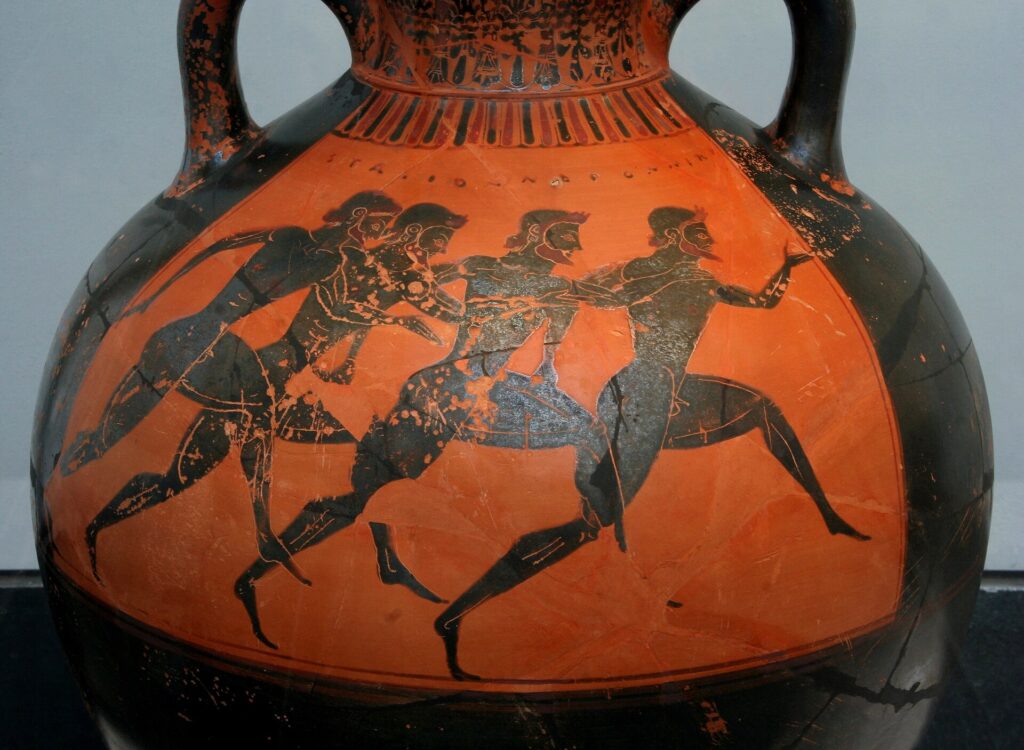
“Know ye not that they which run in a race run all, but one receiveth the prize? So run, that ye may obtain.”
1 Corinthians 9:24
“‘They which run in a race run all, but one receiveth the prize.’ … In the warfare in which we are engaged, all may win who will discipline themselves by obedience to right principles. … The scripture bids us, ‘So run, that ye may obtain.’”
Ellen G. White · The Ministry of Healing, p. 129
Corinth sat within easy reach of the Isthmian Games, one of the great athletic festivals of the ancient world, so Paul’s image would have landed immediately with his original readers. This study’s own source draws out the encouraging difference between the literal race and the spiritual one: on the actual track only a single runner wins, but in the race of Christian discipline, “all may win” who will actually run it.
“And every man that striveth for the mastery is temperate in all things. Now they do it to obtain a corruptible crown; but we an incorruptible.”
1 Corinthians 9:25
The Isthmian victor’s crown was a simple wreath of pine or celery, worth nothing in itself and destined to wither within days. Every serious athlete trained rigorously for exactly that perishable prize; Paul’s own believers are training, by the same logic, for a crown that does not perish at all.
“I therefore so run, not as uncertainly; so fight I, not as one that beateth the air: But I keep under my body, and bring it into subjection: lest that by any means, when I have preached to others, I myself should be a castaway.”
1 Corinthians 9:26-27
The chapter that opened by defending Paul’s apostolic rights ends with him applying its full weight of discipline to himself, not his converts. “Lest… I myself should be a castaway” is a sobering admission from the very apostle who has spent this whole letter correcting everyone else — no amount of past success, visible calling, or hard-won argument exempts him from the same self-discipline he has just spent an entire chapter urging on the Corinthian church.
