Paul has never once set foot in Rome when he writes this letter — the only one of his major epistles sent to a church he did not himself plant. What he sends instead is a single sentence that will, sixteen centuries later, stop an Augustinian monk cold on a staircase in the same city and ignite the Protestant Reformation: the just shall live by faith. Before he ever gets there, though, this opening chapter has to first make the case that every human being, left to themselves, desperately needs to hear it.
A study in Romans 1 · Arthur Baldwin · StandUp4Jesus.Org · 17 min read
Separated Unto The Gospel Of God
“Paul, a servant of Jesus Christ, called to be an apostle, separated unto the gospel of God, (Which he had promised afore by his prophets in the holy scriptures,)”
Romans 1:1-2
Three descriptions of Paul stack up in a single opening sentence — servant, called apostle, separated one — before he ever names a single reader. This letter opens not with pleasantries but with credentials, the same way a formal legal document might, because everything that follows in the next fifteen chapters is going to rest on exactly this authority.
“Concerning his Son Jesus Christ our Lord, which was made of the seed of David according to the flesh; And declared to be the Son of God with power, according to the spirit of holiness, by the resurrection from the dead.”
Romans 1:3-4
“Like the rejected stone, Christ in His earthly mission had borne neglect and abuse. … But the time was near when He would be glorified. By the resurrection from the dead He would be declared ‘the Son of God with power.’”
Ellen G. White · The Desire of Ages, p. 600
Two natures, two proofs, in a single breath — the human descent traced to David’s own royal line, and the divine identity “declared,” not created, by an event still future when the prophets first wrote of Him. The resurrection does not make Jesus the Son of God; it simply proves, publicly and beyond dispute, what was already true.
“By whom we have received grace and apostleship, for obedience to the faith among all nations, for his name: Among whom are ye also the called of Jesus Christ.”
Romans 1:5-6
“To all that be in Rome, beloved of God, called to be saints: Grace to you and peace from God our Father, and the Lord Jesus Christ.”
Romans 1:7
“Called to be saints” is not, in Paul’s own vocabulary, a description reserved for a spiritual elite. Every single believer in Rome — a congregation Paul has never personally met, gathered in the capital of the empire that will one day execute him — already holds this title, simply by virtue of having answered the same call he himself received on the Damascus road.
I Am Debtor
“First, I thank my God through Jesus Christ for you all, that your faith is spoken of throughout the whole world. For God is my witness, whom I serve with my spirit in the gospel of his Son, that without ceasing I make mention of you always in my prayers.”
Romans 1:8-9
A church Paul has never visited already has a reputation reaching every corner of the empire — itself a small, telling detail about exactly how much the capital city magnifies whatever happens within its own walls, for better or worse.
“For I long to see you, that I may impart unto you some spiritual gift, to the end ye may be established; That is, that I may be comforted together with you by the mutual faith both of you and me.”
Romans 1:11-12
Verse 12 quietly corrects verse 11 before the sentence even finishes — Paul starts to frame the coming visit as one-directional, himself the giver and Rome the receiver, and then catches himself: the comfort, and the faith behind it, will run both ways.
“I am debtor both to the Greeks, and to the Barbarians; both to the wise, and to the unwise. So, as much as in me is, I am ready to preach the gospel to you that are at Rome also.”
Romans 1:14-15
“His great heart of sympathy took in all classes. ‘I am debtor,’ he declared, ‘both to the Greeks, and to the barbarians; both to the wise, and to the unwise.’”
Ellen G. White · The Acts of the Apostles, p. 246
Paul owes the gospel to people he has never met and owns nothing material from — a debt created entirely by what he has himself received, not by anything the Romans, the Greeks, or anyone else ever did for him. This is the same logic that will, chapters later in this letter, become the whole argument for why grace obligates gratitude rather than earning it.
The Just Shall Live By Faith
“For I am not ashamed of the gospel of Christ: for it is the power of God unto salvation to every one that believeth; to the Jew first, and also to the Greek.”
Romans 1:16
“Again, in his letter to the Romans, he says: ‘I am not ashamed of the gospel of Christ: for it is the power of God unto salvation to everyone that believeth; to the Jew first, and also to the Greek.’”
Ellen G. White · The Ministry of Healing, p. 215
“Not ashamed” is a striking way to open a thesis statement, and only makes sense against the backdrop of exactly what Paul is not ashamed of — a message centered on a crucified criminal, preached by a man already beaten, jailed, and stoned for it, addressed to believers living inside the very city with the legal power to do all of that to him again.
“For therein is the righteousness of God revealed from faith to faith: as it is written, The just shall live by faith.”
Romans 1:17
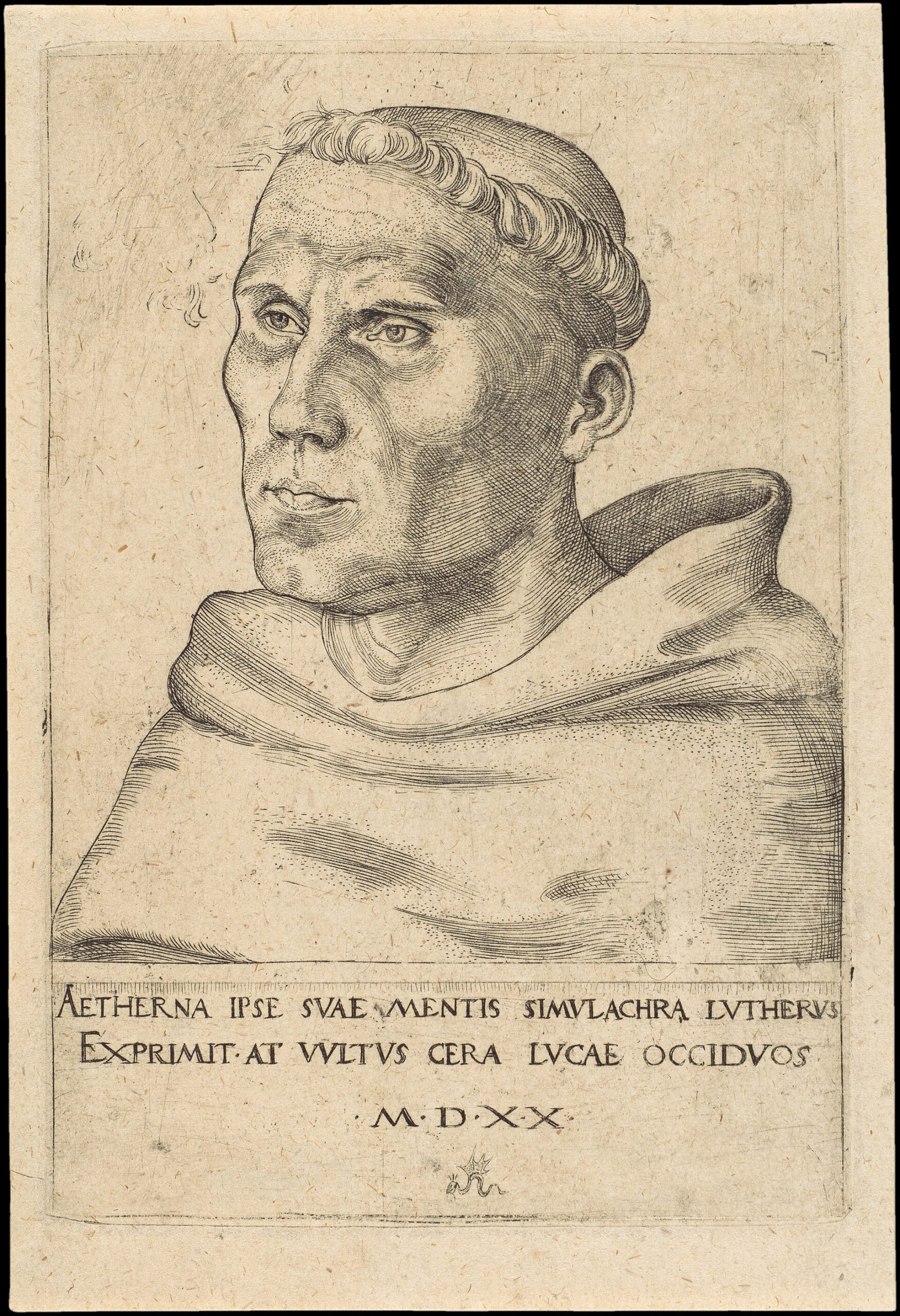
“Luther was one day devoutly climbing these steps, when suddenly a voice like thunder seemed to say to him: ‘The just shall live by faith.’ … He sprang to his feet and hastened from the place in shame and horror. That text never lost its power upon his soul. From that time he saw more clearly than ever before the fallacy of trusting to human works for salvation, and the necessity of constant faith in the merits of Christ.”
Ellen G. White · The Great Controversy, p. 125
Fifteen centuries after Paul wrote it, this single verse stops a young monk mid-motion on the very “Pilate’s Staircase” in Rome he had traveled there specifically to climb on his knees, in hope of earning an indulgence. Luther never finishes the climb. The whole Protestant Reformation, in one real sense, traces back to a sentence Paul wrote to a church he had never visited, quoting a prophet who wrote it seven centuries before either of them.
“From faith to faith” is easy to read past, but it frames the entire book this chapter opens: not faith earning righteousness as a wage, but righteousness already credited by faith, received by faith, and lived out by that same faith from beginning to end — a single continuous thread the next fifteen chapters will spend unpacking in full.
Without Excuse
“For the wrath of God is revealed from heaven against all ungodliness and unrighteousness of men, who hold the truth in unrighteousness; Because that which may be known of God is manifest in them; for God hath shewed it unto them.”
Romans 1:18-19
The thesis in verse 17 announces good news; verse 18 pivots immediately to the bad news that makes it necessary. Paul does not soften the transition — the very next word after “the just shall live by faith” is “wrath,” because a gospel of rescue only makes sense once the danger it rescues from is fully named.
“For the invisible things of him from the creation of the world are clearly seen, being understood by the things that are made, even his eternal power and Godhead; so that they are without excuse.”
Romans 1:20
“Yet the works of creation testify of God’s power and greatness. … Those who take the written word as their counselor will find in science an aid to understand God. ‘The invisible things of Him from the creation of the world are clearly seen, being understood by the things that are made, even His eternal power and Godhead.’”
Ellen G. White · Patriarchs and Prophets, p. 116
This is one of Scripture’s clearest statements of what theologians call general revelation — not the Bible, not a prophet, but simply creation itself, available to every human being who has ever lived, sufficient to establish that a Creator exists and answerable for what is done with that knowledge.
“Because that, when they knew God, they glorified him not as God, neither were thankful; but became vain in their imaginations, and their foolish heart was darkened. Professing themselves to be wise, they became fools.”
Romans 1:21-22
“They had once known Him; but because ‘they glorified Him not as God, neither were thankful; but became vain in their imaginations, … their foolish heart was darkened.’ … Yet in His mercy God did not blot them out of existence. He purposed to give them an opportunity of again becoming acquainted with Him through His chosen people.”
Ellen G. White · The Acts of the Apostles, p. 14
The sin Paul names first is not some dramatic vice but ingratitude — “neither were thankful” — a quiet, ordinary failure that this study’s own source traces all the way back to the pagan nations who once genuinely knew God and simply let that knowledge slip through neglect rather than sudden rebellion.
“And changed the glory of the uncorruptible God into an image made like to corruptible man, and to birds, and fourfooted beasts, and creeping things.”
Romans 1:23
The trade Paul describes here is a genuine downgrade at every step — the uncorruptible glory of God exchanged first for a human image, then for birds, then four-footed beasts, then finally creeping things, idolatry’s own steady descent traced in the very order of the sentence.
God Gave Them Up
“Wherefore God also gave them up to uncleanness through the lusts of their own hearts, to dishonour their own bodies between themselves: Who changed the truth of God into a lie, and worshipped and served the creature more than the Creator, who is blessed for ever. Amen.”
Romans 1:24-25
“Men ‘did not like to retain God in their knowledge;’ they ‘became vain in their imaginations, and their foolish heart was darkened.’ … Therefore ‘God gave them over to a mind void of judgment.’”
Ellen G. White · Patriarchs and Prophets, p. 81
This study’s own source ties this exact downward spiral to a real historical moment: the corruption before the Flood, when the godly line of Seth intermarried with the line of Cain and, step by step, lost the very knowledge of God this chapter says every human being once had. “God gave them up” is not an arbitrary sentence handed down from outside; it is God allowing people to keep walking in the direction they have already, repeatedly, chosen for themselves.
“And even as they did not like to retain God in their knowledge, God gave them over to a reprobate mind, to do those things which are not convenient.”
Romans 1:28
Three times in five verses this same phrase recurs — “gave them up,” “gave them up,” “gave them over” — a structure that is easy to miss without reading straight through, but repetition this deliberate is itself the point: not one single act of judgment, but a pattern, repeated and worsening.
“Being filled with all unrighteousness, fornication, wickedness, covetousness, maliciousness; full of envy, murder, debate, deceit, malignity; whisperers, Backbiters, haters of God, despiteful, proud, boasters, inventors of evil things, disobedient to parents.”
Romans 1:29-30
“In Scripture, backbiters are classed with ‘haters of God,’ with ‘inventors of evil things,’ with those who are ‘without natural affection, implacable, unmerciful,’ ‘full of envy, murder, debate, deceit, malignity.’ It is ‘the judgment of God, that they which commit such things are worthy of death.’”
Ellen G. White · Education, p. 235
What this study’s own source finds worth pulling out of this entire list, for a chapter on training children’s speech, is not murder or fornication but backbiting — a sin ordinary enough to fit comfortably in any classroom or home, sitting on Paul’s own list in exactly the same company as haters of God and inventors of evil.
“Without understanding, covenantbreakers, without natural affection, implacable, unmerciful: Who knowing the judgment of God, that they which commit such things are worthy of death, not only do the same, but have pleasure in them that do them.”
Romans 1:31-32
The chapter’s own final sentence names a specific, deeper corruption than the sins themselves — not merely doing wrong, but “have pleasure in them that do them,” actively applauding the same evil in others. Every reader who finishes this chapter, Jew or Gentile, wise or unwise, is meant to close it recognizing at least a little of themselves somewhere on this list — the exact discomfort chapter 2 will pick up and press even further.