Table of Contents
Proverbs
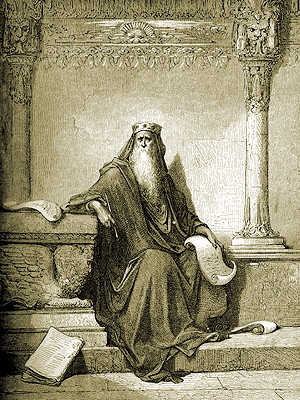
Proverbs is wisdom stripped of narrative — almost none of its thirty-one chapters tell a story. Instead, chapter after chapter, a father instructs a son, contrasting two paths through ordinary life: the wise and the foolish, the righteous and the wicked, the diligent and the slothful, the faithful and the adulterous. Most of it was written by Solomon, the wisest king Israel ever had — and, as his own later life shows, wisdom of this kind can be known and still not be lived.
The book’s most famous line comes first and governs everything after it: “The fear of the LORD is the beginning of knowledge.” Not the end of thinking, but its starting point — every practical maxim that follows, about money, speech, friendship, work, and family, is built on that one foundation. This series follows Proverbs chapter by chapter, reading its wisdom the way it was written to be read: not as abstract philosophy, but as instruction meant to actually be taken home.
List Of Articles
The Fear Of The LORD Is The Beginning Of Knowledge
the book's own opening thesis — a father's warning against violent company, and Wisdom herself crying out in the streets to anyone who will listen
Proverbs 1If Thou Seekest Her As Silver
wisdom offered freely and still worth digging for — protection from both a violent man's company and a broken covenant, ending on the same two paths Proverbs 1 already named
Proverbs 2Trust In The LORD With All Thine Heart
some of the book's most quoted lines — and Ellen White's own aside that Solomon, who wrote them, did not always live inside them in his later years
Proverbs 3Keep Thy Heart With All Diligence
Solomon speaking as a son before he speaks as a father, passing forward exactly what David once taught him
Proverbs 4Drink Waters Out Of Thine Own Cistern
the book's frankest warning against sexual unfaithfulness, answered not with mere restraint but with a marriage actually worth rejoicing in
Proverbs 5Go To The Ant, Thou Sluggard
cosigning a debt, an insect's unsupervised work ethic, a troublemaker's body language, and a numbered list of what God actually hates, all in thirty-five verses
Proverbs 6As An Ox Goeth To The Slaughter
a father's eyewitness account of one specific young man on one specific night — and Ellen White's chain of Bible strong men brought down by exactly this same danger
Proverbs 7The LORD Possessed Me In The Beginning Of His Way
Wisdom's own voice describing existence before creation itself — Patriarchs and Prophets identifies her outright as Christ, the eternal Word, in the opening chapter on Creation
Proverbs 8Wisdom Hath Builded Her House
closes the book's nine-chapter introduction with two rival banquets calling the same simple passerby — and Ahithophel's brilliant, God-less wisdom as a warning of what the wrong table actually costs
Proverbs 9The Hand Of The Diligent Maketh Rich
opens Solomon's long collection of short, independent sayings — thirty-two verses of the righteous set against the wicked, one line at a time
Proverbs 10He That Winneth Souls Is Wise
a chapter that keeps circling back to one question from a dozen angles — what actually delivers a person when trouble comes
Proverbs 11A Righteous Man Regardeth The Life Of His Beast
character tested in the moments least likely to be watched — Ellen White ties this verse directly to Balaam striking his own donkey three times
Proverbs 12He That Walketh With Wise Men Shall Be Wise
character as contagious — appearance and reality pulled apart in riches and poverty alike, and Ellen White's own short chain of friendship counsel built around this single verse
Proverbs 13Righteousness Exalteth A Nation
a wife's daily choices, a witness under oath, and a road that only seems right, all building toward Ellen White's own philosophy of history — a nation's strength measured by fidelity, not by its boasted greatness
Proverbs 14A Soft Answer Turneth Away Wrath
the tone of a reply weighed as heavily as its content — Ellen White ties the chapter's opening counsel to silence under provocation and its closing one to Gideon, the least in his father's house
Proverbs 15Pride Goeth Before Destruction
planning and confidence measured against a sovereignty that directs every step anyway — Ellen White traces this chapter's warning on pride to family, church, and nation alike, and its counsel on self-rule straight to Christ's own example
Proverbs 16A Friend Loveth At All Times
quiet against strife, a word against a hundred stripes, a fool's silence against his speech — Ellen White ties the chapter's furnace of testing to a real sickbed, its merry heart to actual bodily health, and its counsel to spare words straight to the businessman's wall
Proverbs 17A Friend That Sticketh Closer Than A Brother
a man who separates himself from everyone opening the chapter, a man who cannot survive without someone closing it — Ellen White grounds the strong-tower verse in living contact with Christ and capitalizes the chapter's last word, Friend, writing it to a woman whose every earthly hope had just failed her
Proverbs 18A False Witness Shall Not Be Unpunished
the same warning against false witness opening and closing one section almost word for word — Ellen White applies it directly to Gehazi's lie in the Naaman story, and ties the chapter's counsel on anger to the very paragraph already quoted back in Proverbs 16
Proverbs 19Say Not Thou, I Will Recompense Evil
a chapter of things nobody can see — a heart's counsel, a false balance, the LORD's own candle searching a belly — Ellen White reads its counsel against revenge as the very same instruction Christ gave on the mount, centuries apart, and traces its opening wine-warning straight into the one that closes Proverbs 23
Proverbs 20The King's Heart Is In The Hand Of The LORD
from a throne down to a housetop corner, the same claim tested at every level — Ellen White ties the opening verse to Nebuchadnezzar's own eventual conversion, and its warning on dishonest gain to the same financial-ethics chain of Proverbs already quoted back in chapter 13
Proverbs 21Train Up A Child In The Way He Should Go
a good name chosen above riches, then built out verse by verse — Ellen White calls the training-verse's promise positive rather than hopeful, and pulls the chapter's last verse from the very Testimonies page already quoted back in Proverbs 10
Proverbs 22My Son, Give Me Thine Heart
a chapter of things that look good and turn out ruinous, landing on the one request that is exactly as good as it looks — Ellen White puts Solomon's own plea for his son's heart directly in Christ's mouth, and comments on the closing wine-passage on the very same commentary page
Proverbs 23I Went By The Field Of The Slothful
a field gone to thorns, an enemy's fall, a neighbor drawn toward death — Ellen White addresses the overgrown-vineyard verses to a real idle brother in her own congregation, and chains this chapter's own counsel against revenge to the same page already quoted back in Proverbs 20
Proverbs 24If Thine Enemy Be Hungry, Give Him Bread To Eat
proverbs of Solomon copied out generations later by Hezekiah's own scribes — Ellen White completes here the same four-verse chain against revenge already begun in Proverbs 20 and 24, and applies the closing city-without-walls verse to a young man's uncontrolled temper at a real publishing office
Proverbs 25Answer Not A Fool According To His Folly
two verses in a row telling the reader exactly opposite things to do about a fool — Ellen White ties the mad-man-casting-firebrands verse to careless, hasty speech excused as mere sport, and the closing pit-and-stone verse closes out the financial-ethics chain already quoted five times across this series
Proverbs 26Iron Sharpeneth Iron
a long series of unusually vivid pictures — a fining pot, a fig tree, a fool in a mortar, iron on iron — with no EGW hit anywhere in the loaded corpus for this one, so the study runs on Scripture and cross-links alone
Proverbs 27He That Covereth His Sins Shall Not Prosper
a false confidence set against a true one in nearly every verse — Ellen White ties the turned-away-ear verse to the ark's capture in 1 Samuel, places the confession verse only sentences from Christ the Advocate, and reaches, in the haste-to-be-rich verse, the sixth stop on the financial-ethics chain running through this whole series
Proverbs 28Where There Is No Vision, The People Perish
a throne, a household, and a city all tested by the same standard — whether correction is actually received — Ellen White applies the often-reproved-hardeneth-his-neck verse to a real young man alongside Christ's own patient call to return, and ties the hasty-words verse to the same Education page already used in Proverbs 26
Proverbs 29Every Word Of God Is Pure
an otherwise unknown man named Agur confesses his own ignorance and then asks the one question this book never quite answers outright — what is God's Son's name — Ellen White answers his later plea for the unadded-to word with a warning against feeding the soul mere theories, and quotes his ant proverb right beside the one from Proverbs 6
Proverbs 30Favour Is Deceitful, And Beauty Is Vain
the book that opened with Wisdom calling out like a woman in the street closes on a woman who simply lives what Wisdom described — the same rare above-rubies phrase used of both — and Ellen White chains this chapter's own portrait straight onto the prudent-wife verse already quoted back in Proverbs 19
Proverbs 31