The book of Acts does not end with a martyrdom, a triumph, or even a tidy resolution. It ends with an open door — a chained man in a rented house, teaching anyone who will come, with nobody stopping him. After twenty-seven chapters of riots, shipwrecks, and courtrooms, that is apparently exactly the ending Luke wanted this whole record to leave behind.
A study in Acts 28 · Arthur Baldwin · StandUp4Jesus.Org · 16 min read
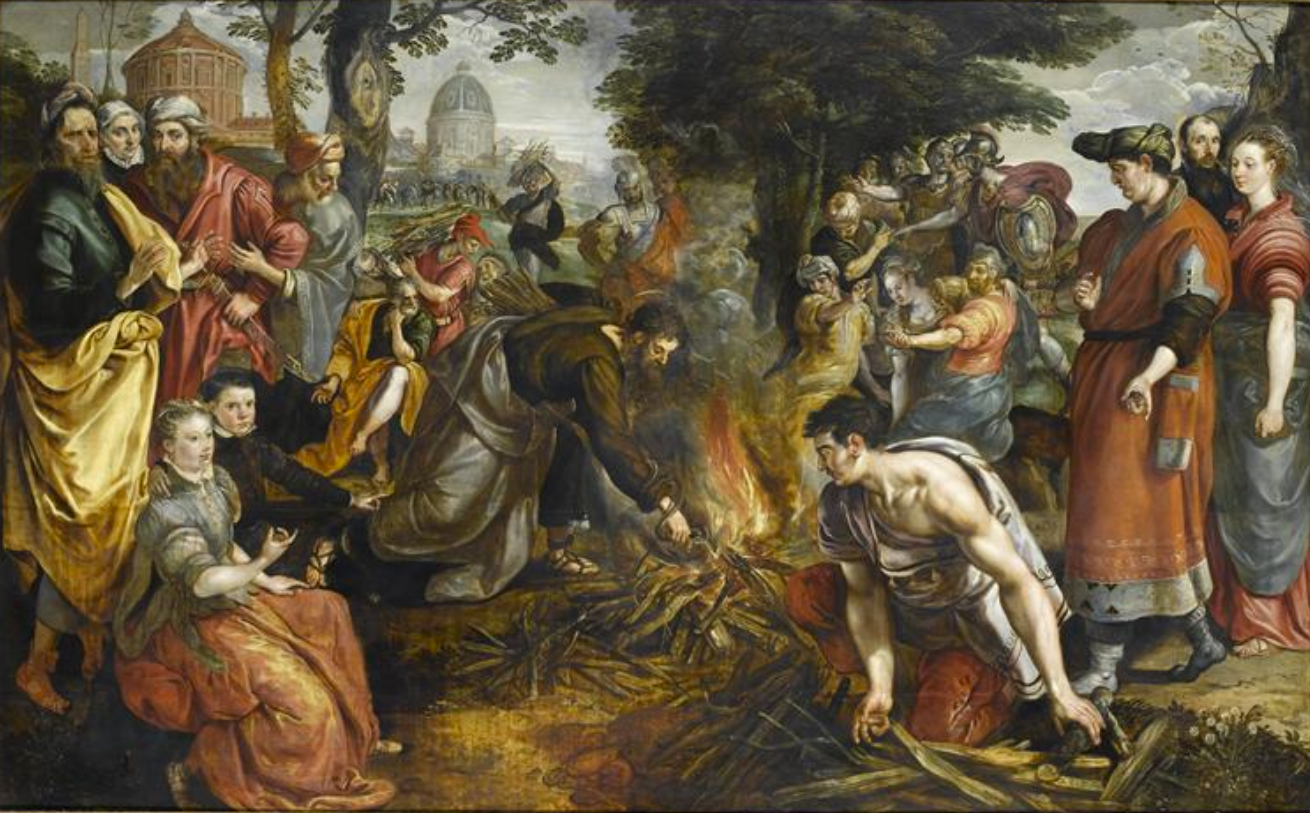
No Doubt This Man Is A Murderer
“And when they were escaped, then they knew that the island was called Melita. And the barbarous people shewed us no little kindness: for they kindled a fire, and received us every one, because of the present rain, and because of the cold.”
Acts 28:1-2
“The shipwrecked crew were kindly received by the barbarous people of Melita. … Paul was among those who were active in ministering to the comfort of others.”
Ellen G. White · The Acts of the Apostles, p. 445
Not one of the two hundred and seventy-six people this book’s own previous chapter promised would reach land safely is missing — and the very first thing the exhausted, half-drowned apostle does on solid ground is not rest, but gather firewood for everyone else.
“And when Paul had gathered a bundle of sticks, and laid them on the fire, there came a viper out of the heat, and fastened on his hand. And when the barbarians saw the venomous beast hang on his hand, they said among themselves, No doubt this man is a murderer, whom, though he hath escaped the sea, yet vengeance suffereth not to live.”
Acts 28:3-4
The islanders’ own theology of divine justice runs backward but not unreasonably — a chained man bitten by a viper right after surviving a shipwreck looks, by any ordinary standard of cosmic bookkeeping, like a guilty man finally catching up with his sentence.
“And he shook off the beast into the fire, and felt no harm. Howbeit they looked when he should have swollen, or fallen down dead suddenly: but after they had looked a great while, and saw no harm come to him, they changed their minds, and said that he was a god.”
Acts 28:5-6
The same crowd swings from “murderer” to “god” without ever once landing on the actual truth in between — neither verdict correct, both extremes revealing more about how readily people reach for supernatural explanations than about who Paul really is.
He Thanked God, And Took Courage
“In the same quarters were possessions of the chief man of the island, whose name was Publius; who received us, and lodged us three days courteously. And it came to pass, that the father of Publius lay sick of a fever and of a bloody flux: to whom Paul entered in, and prayed, and laid his hands on him, and healed him.”
Acts 28:7-8
“So when this was done, others also, which had diseases in the island, came, and were healed: Who also honoured us with many honours; and when we departed, they laded us with such things as were necessary.”
Acts 28:9-10
“During the three months that the ship’s company remained at Melita, Paul and his fellow laborers improved many opportunities to preach the gospel. … For Paul’s sake the entire shipwrecked company were treated with great kindness; all their wants were supplied, and upon leaving Melita they were liberally provided with everything needful for their voyage.”
Ellen G. White · The Acts of the Apostles, p. 446
An entire island’s hospitality traces back, this study’s own source notes, to one prisoner’s own ministry — every shipwrecked passenger benefiting, whether they ever believed a word of Paul’s gospel or not, from the goodwill his healing generated.
“And after three months we departed in a ship of Alexandria, which had wintered in the isle, whose sign was Castor and Pollux. And landing at Syracuse, we tarried there three days.”
Acts 28:11-12
“Where we found brethren, and were desired to tarry with them seven days: and so we went toward Rome. And from thence, when the brethren heard of us, they came to meet us as far as Appii forum, and The three taverns: whom when Paul saw, he thanked God, and took courage.”
Acts 28:14-15
“Suddenly a cry of joy is heard, and a man springs from the passing throng and falls upon the prisoner’s neck, embracing him with tears and rejoicing, as a son would welcome a long-absent father. Again and again is the scene repeated as, with eyes made keen by loving expectation, many discern in the chained captive the one who at Corinth, at Philippi, at Ephesus, had spoken to them the words of life.”
Ellen G. White · The Acts of the Apostles, p. 448
Believers Paul has never personally met in Rome walk forty miles down the Appian Way for the sole purpose of meeting a prisoner they only know through his own letter — the epistle to the Romans, written years before he ever set foot in the city he addressed it to.
“Few realize the significance of those words of Luke, that when Paul saw his brethren, ‘he thanked God, and took courage.’ … The cloud of sadness that had rested upon his spirit was swept away. His Christian life had been a succession of trials, sufferings, and disappointments, but in that hour he felt abundantly repaid.”
Ellen G. White · The Acts of the Apostles, p. 449
This single quiet sentence — “he thanked God, and took courage” — is easy to read past on the way to the more dramatic scenes surrounding it, and this study’s own source insists it deserves more weight than that: an old, worn-out man, walking in chains toward an uncertain trial, finding in a handful of strangers’ tears exactly enough strength to keep going.
I Was Constrained To Appeal Unto Caesar
“And when we came to Rome, the centurion delivered the prisoners to the captain of the guard: but Paul was suffered to dwell by himself with a soldier that kept him.”
Acts 28:16
“The good account which he gave of Paul, together with the letter from Festus, caused the apostle to be favorably regarded by the chief captain, and, instead of being thrown into prison, he was permitted to live in his own hired house.”
Ellen G. White · The Acts of the Apostles, p. 449
Julius’s own report to his superiors, unrecorded in the text but its effect plainly visible, is the quiet, offstage reason Paul arrives in the capital not to a cell but to relatively open custody — a centurion’s private good word doing real, lasting work long after their voyage together has ended.
“Men and brethren, though I have committed nothing against the people, or customs of our fathers, yet was I delivered prisoner from Jerusalem into the hands of the Romans. Who, when they had examined me, would have let me go, because there was no cause of death in me.”
Acts 28:17-18
“But when the Jews spake against it, I was constrained to appeal unto Cæsar; not that I had ought to accuse my nation of. For this cause therefore have I called for you, to see you, and to speak with you: because that for the hope of Israel I am bound with this chain.”
Acts 28:19-20
“He said nothing of the abuse which he had suffered at the hands of the Jews, or of their repeated plots to assassinate him. His words were marked with caution and kindness. He was not seeking to win personal attention or sympathy, but to defend the truth and to maintain the honor of the gospel.”
Ellen G. White · The Acts of the Apostles, p. 450
Paul has every factual grievance available to him — the temple riot, the forty-man murder oath, two years of stalled justice under Felix’s own greed — and volunteers none of it. Three days into his own arrival, still chained, he reaches out to the local Jewish leaders first, before his own accusers ever get the chance to poison the account against him.
“And they said unto him, We neither received letters out of Judæa concerning thee, neither any of the brethren that came shewed or spake any harm of thee. But we desire to hear of thee what thou thinkest: for as concerning this sect, we know that every where it is spoken against.”
Acts 28:21-22
No formal accusation has even reached Rome ahead of him — every court this book has recorded, and this final Roman audience too, turns out to have started from genuine curiosity rather than an already-settled verdict.
With All Confidence, No Man Forbidding Him
“And when they had appointed him a day, there came many to him into his lodging; to whom he expounded and testified the kingdom of God, persuading them concerning Jesus, both out of the law of Moses, and out of the prophets, from morning till evening.”
Acts 28:23
“He related his own experience, and presented arguments from the Old Testament Scriptures with simplicity, sincerity, and power.”
Ellen G. White · The Acts of the Apostles, p. 451
Morning until evening, a full day’s labor, is the same pattern this study has already watched Paul repeat in synagogue after synagogue since Antioch in Pisidia — the same Scriptures, the same patient method, now delivered one final time under armed guard in a rented Roman house.
“And some believed the things which were spoken, and some believed not. And when they agreed not among themselves, they departed, after that Paul had spoken one word, Well spake the Holy Ghost by Esaias the prophet unto our fathers.”
Acts 28:24-25
“For the heart of this people is waxed gross, and their ears are dull of hearing, and their eyes have they closed; lest they should see with their eyes, and hear with their ears, and understand with their heart, and should be converted, and I should heal them.”
Acts 28:27
The same split response this book recorded at Athens, at Thessalonica, at Rome’s own doorstep now — belief and unbelief dividing this final audience exactly as they have divided every audience since Pentecost, and Paul reaches for the same prophet, Isaiah, that Jesus Himself once quoted for the identical reason.
“Be it known therefore unto you, that the salvation of God is sent unto the Gentiles, and that they will hear it.”
Acts 28:28
This is the same pivot this study’s own thirteenth chapter first recorded at Antioch in Pisidia, restated here one last time, in Rome itself, at the very edge of the known world this book set out to reach all the way back in its own opening chapter’s promise of witnesses “unto the uttermost part of the earth.”
“And Paul dwelt two whole years in his own hired house, and received all that came in unto him, Preaching the kingdom of God, and teaching those things which concern the Lord Jesus Christ, with all confidence, no man forbidding him.”
Acts 28:30-31
“In the providence of God this delay resulted in the furtherance of the gospel. Through the favor of those who had Paul in charge, he was permitted to dwell in a commodious house, where he could meet freely with his friends and also present the truth daily to those who came to hear.”
Ellen G. White · The Acts of the Apostles, p. 453
This book began in an upper room with a hundred and twenty frightened disciples waiting for a promised power, uncertain what came next. It ends, twenty-eight chapters and roughly three decades later, with one chained man in a rented house, teaching “with all confidence” and “no man forbidding him” — the last words of the whole book not a conclusion but an open door, deliberately left standing ajar. Luke does not record Paul’s eventual death, does not tie off Rome’s own church, does not resolve the empire’s final verdict. The gospel, having crossed from a locked room in Jerusalem to the emperor’s own capital, is still simply being preached, freely, when the record itself just stops — as if the real ending was never meant to be written, only continued, by everyone who reads this far and picks up the same work.
