The first missionary journey proved Gentiles could be saved; this chapter is where the church has to decide, formally and permanently, exactly what that salvation requires of them. A single unresolved question threatens to split the young church down the middle — and how it gets settled, by a council in Jerusalem rather than by any one apostle’s personal opinion, becomes as important to the future of Christianity as the answer itself.
A study in Acts 15 · Arthur Baldwin · StandUp4Jesus.Org · 17 min read
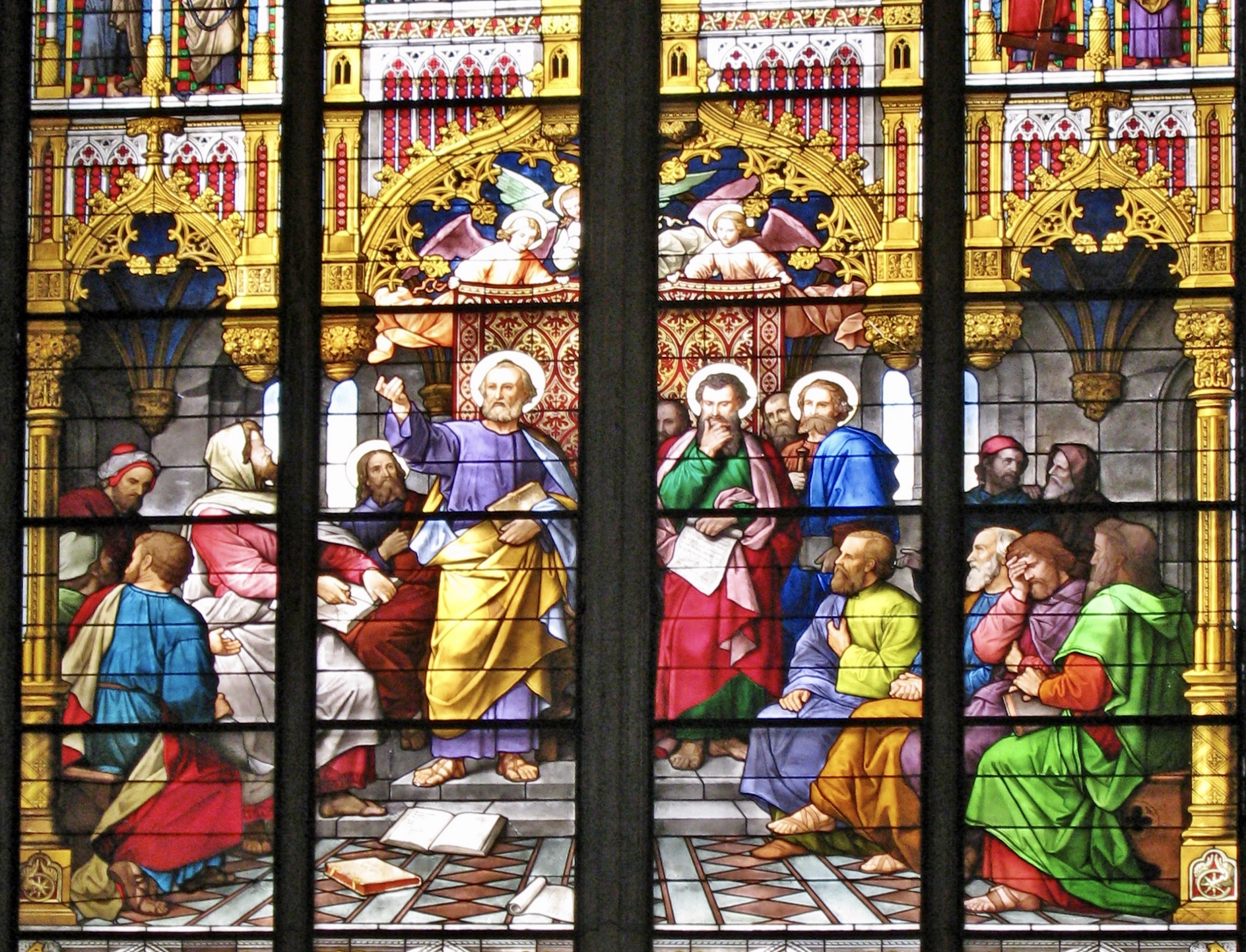
Except Ye Be Circumcised
“And certain men which came down from Judæa taught the brethren, and said, Except ye be circumcised after the manner of Moses, ye cannot be saved.”
Acts 15:1
“With great assurance these Judaizing teachers asserted that in order to be saved, one must be circumcised and must keep the entire ceremonial law.”
Ellen G. White · The Acts of the Apostles, p. 188
This is not a minor procedural disagreement. As stated, it is a flat claim about the very requirements of salvation itself — exactly the kind of question that cannot simply be left open for each local church to answer however it pleases.
“When therefore Paul and Barnabas had no small dissension and disputation with them, they determined that Paul and Barnabas, and certain other of them, should go up to Jerusalem unto the apostles and elders about this question.”
Acts 15:2
“Finally, the members of the church, fearing that a division among them would be the outcome of continued discussion, decided to send Paul and Barnabas, with some responsible men from the church, to Jerusalem to lay the matter before the apostles and elders.”
Ellen G. White · The Acts of the Apostles, p. 190
Paul, who has already received his own commission directly from Christ on the Damascus road, does not simply overrule these teachers by personal authority and move on. He submits the whole controversy to the wider church instead of settling it unilaterally.
“And being brought on their way by the church, they passed through Phenice and Samaria, declaring the conversion of the Gentiles: and they caused great joy unto all the brethren.”
Acts 15:3
Even on the way to resolve a genuine crisis, Paul and Barnabas cannot help but keep reporting good news along the road — the same joy that closed chapter 13 spreading now through Phoenicia and Samaria as well.
“And when they were come to Jerusalem, they were received of the church, and of the apostles and elders, and they declared all things that God had done with them. But there rose up certain of the sect of the Pharisees which believed, saying, That it was needful to circumcise them, and to command them to keep the law of Moses.”
Acts 15:4-5
The same controversy that started in Antioch simply follows them to Jerusalem. These are not outside agitators but believing Pharisees, genuinely converted to Christ and still convinced, in good conscience, that the law of Moses remains binding on every believer.
Why Tempt Ye God
“And the apostles and elders came together for to consider of this matter. And when there had been much disputing, Peter rose up, and said unto them, Men and brethren, ye know how that a good while ago God made choice among us, that the Gentiles by my mouth should hear the word of the gospel, and believe.”
Acts 15:6-7
“‘When there had been much disputing, Peter rose up, and said unto them, Men and brethren, ye know how that a good while ago God made choice among us, that the Gentiles by my mouth should hear the word of the gospel, and believe.’ He reasoned that the Holy Spirit had decided the matter under dispute by descending with equal power upon the uncircumcised Gentiles and the circumcised Jews.”
Ellen G. White · The Acts of the Apostles, p. 192
Peter’s whole argument reaches back to events already recorded in this very book — his own vision of the sheet and the household of Cornelius, chapters this study has already covered in full. He is not offering a new opinion; he is simply reminding the council what God already, visibly, decided.
“And God, which knoweth the hearts, bare them witness, giving them the Holy Ghost, even as he did unto us; And put no difference between us and them, purifying their hearts by faith.”
Acts 15:8-9
“Now therefore why tempt ye God, to put a yoke upon the neck of the disciples, which neither our fathers nor we were able to bear? But we believe that through the grace of the Lord Jesus Christ we shall be saved, even as they.”
Acts 15:10-11
Peter’s own turn of phrase is a quiet, remarkable admission — the law he is defending against being imposed on Gentiles is the very “yoke” he confesses “neither our fathers nor we were able to bear.” His argument for grace rests, in the end, on his own nation’s long, honest history of failing to keep the law perfectly.
“Then all the multitude kept silence, and gave audience to Barnabas and Paul, declaring what miracles and wonders God had wrought among the Gentiles by them.”
Acts 15:12
A room full of “much disputing” falls completely silent the moment Peter finishes speaking. Barnabas and Paul then get to add their own firsthand testimony to an argument the room has already, largely, been persuaded by.
My Sentence Is
“And after they had held their peace, James answered, saying, Men and brethren, hearken unto me: Simeon hath declared how God at the first did visit the Gentiles, to take out of them a people for his name.”
Acts 15:13-14
“And to this agree the words of the prophets; as it is written, After this I will return, and will build again the tabernacle of David, which is fallen down; and I will build again the ruins thereof, and I will set it up: That the residue of men might seek after the Lord, and all the Gentiles, upon whom my name is called, saith the Lord, who doeth all these things.”
Acts 15:15-17
James, the Lord’s own brother and by tradition a man deeply respected for his own strict personal piety, is exactly the voice this argument needs. If even he can show from the prophets that Gentile inclusion was always part of the plan, the case becomes very hard to resist.
“Wherefore my sentence is, that we trouble not them, which from among the Gentiles are turned to God: But that we write unto them, that they abstain from pollutions of idols, and from fornication, and from things strangled, and from blood.”
Acts 15:19-20
“James presided at the council, and his final decision was, ‘Wherefore my sentence is, that we trouble not them, which from among the Gentiles are turned to God.’”
Ellen G. White · The Acts of the Apostles, p. 194
James’s own decision is worth noting for what it refuses to include as much as what it requires. Circumcision and the whole ceremonial law are simply left out; only a small, practical handful of restrictions remain, aimed at removing real obstacles to fellowship between two very different cultures rather than imposing a burden of salvation.
It Seemed Good To The Holy Ghost
“Then pleased it the apostles and elders, with the whole church, to send chosen men of their own company to Antioch with Paul and Barnabas; namely, Judas surnamed Barsabas, and Silas, chief men among the brethren.”
Acts 15:22
“Forasmuch as we have heard, that certain which went out from us have troubled you with words, subverting your souls, saying, Ye must be circumcised, and keep the law: to whom we gave no such commandment.”
Acts 15:24
The letter’s own wording is careful to state plainly that these troublesome teachers acted entirely without the council’s authorization — formally, publicly correcting the record for every Gentile believer who had been told otherwise.
“For it seemed good to the Holy Ghost, and to us, to lay upon you no greater burden than these necessary things; That ye abstain from meats offered to idols, and from blood, and from things strangled, and from fornication: from which if ye keep yourselves, ye shall do well. Fare ye well.”
Acts 15:28-29
“The Holy Spirit saw good not to impose the ceremonial law on the Gentile converts, and the mind of the apostles regarding this matter was as the mind of the Spirit of God.”
Ellen G. White · The Acts of the Apostles, p. 194
“It seemed good to the Holy Ghost, and to us” places human deliberation and divine guidance side by side, in that exact order, without treating them as competitors. The council does not claim direct revelation overriding their own discussion; it claims that Spirit and careful discussion, working together, arrived at the same conclusion.
“So when they were dismissed, they came to Antioch: and when they had gathered the multitude together, they delivered the epistle: Which when they had read, they rejoiced for the consolation.”
Acts 15:30-31
“The broad and far-reaching decisions of the general council brought confidence into the ranks of the Gentile believers, and the cause of God prospered.”
Ellen G. White · The Acts of the Apostles, p. 197
Relief, not merely agreement, is the response this letter produces — a genuine burden of anxiety, carried by ordinary Gentile believers who feared they might not truly belong, finally, formally lifted.
“When Peter, at a later date, visited Antioch… he so far overcame his natural prejudice as to sit at table with the Gentile converts. But when certain Jews who were zealous for the ceremonial law, came from Jerusalem, Peter injudiciously changed his deportment toward the converts from paganism. … insomuch that Barnabas also was carried away with their dissimulation.”
Ellen G. White · The Acts of the Apostles, p. 197
A doctrinal decision is one thing; living it out consistently, this study’s own source is careful to note, turns out to be harder still. Even Peter, whose own vision and testimony helped settle this very question, later wavers under social pressure — a reminder that a right answer, agreed to in council, still has to be lived out one meal, one relationship, at a time.
The Contention Was So Sharp
“And some days after Paul said unto Barnabas, Let us go again and visit our brethren in every city where we have preached the word of the Lord, and see how they do.”
Acts 15:36
The second missionary journey begins with exactly the same pastoral instinct that closed the first — not the excitement of new territory, but simple concern for churches already planted, still growing, still in need of care.
“And Barnabas determined to take with them John, whose surname was Mark. But Paul thought not good to take him with them, who departed from them from Pamphylia, and went not with them to the work.”
Acts 15:37-38
“He ‘thought not good to take … with them’ one who during their first missionary journey had left them in a time of need. He was not inclined to excuse Mark’s weakness in deserting the work for the safety and comforts of home. He urged that one with so little stamina was unfitted for a work requiring patience, self-denial, bravery, devotion, faith, and a willingness to sacrifice, if need be, even life itself.”
Ellen G. White · The Acts of the Apostles, p. 202
Paul’s caution is entirely reasonable on its own terms; this study’s own earlier chapter already showed exactly what abandoning the mission at Perga looked like the first time. Barnabas, true to the character this book has shown him having since chapter 4, is the one willing to give a failed man a second chance.
“And the contention was so sharp between them, that they departed asunder one from the other: and so Barnabas took Mark, and sailed unto Cyprus; And Paul chose Silas, and departed, being recommended by the brethren unto the grace of God.”
Acts 15:39-40
Two men who have just spent an entire chapter modeling exactly how a church should handle deep disagreement — through open discussion, testimony, and a council rather than a fight — cannot manage to apply that same grace to their own personal partnership. Scripture records the sharpness of the quarrel without softening it into something tidier than it actually was.
“And he went through Syria and Cilicia, confirming the churches.”
Acts 15:41
The chapter’s own final sentence is deliberately understated. No verdict is rendered on which man was right; the work of confirming churches simply continues, now carried forward by two separate teams instead of one — a painful split that this book, without comment, quietly turns into twice the missionary reach.
